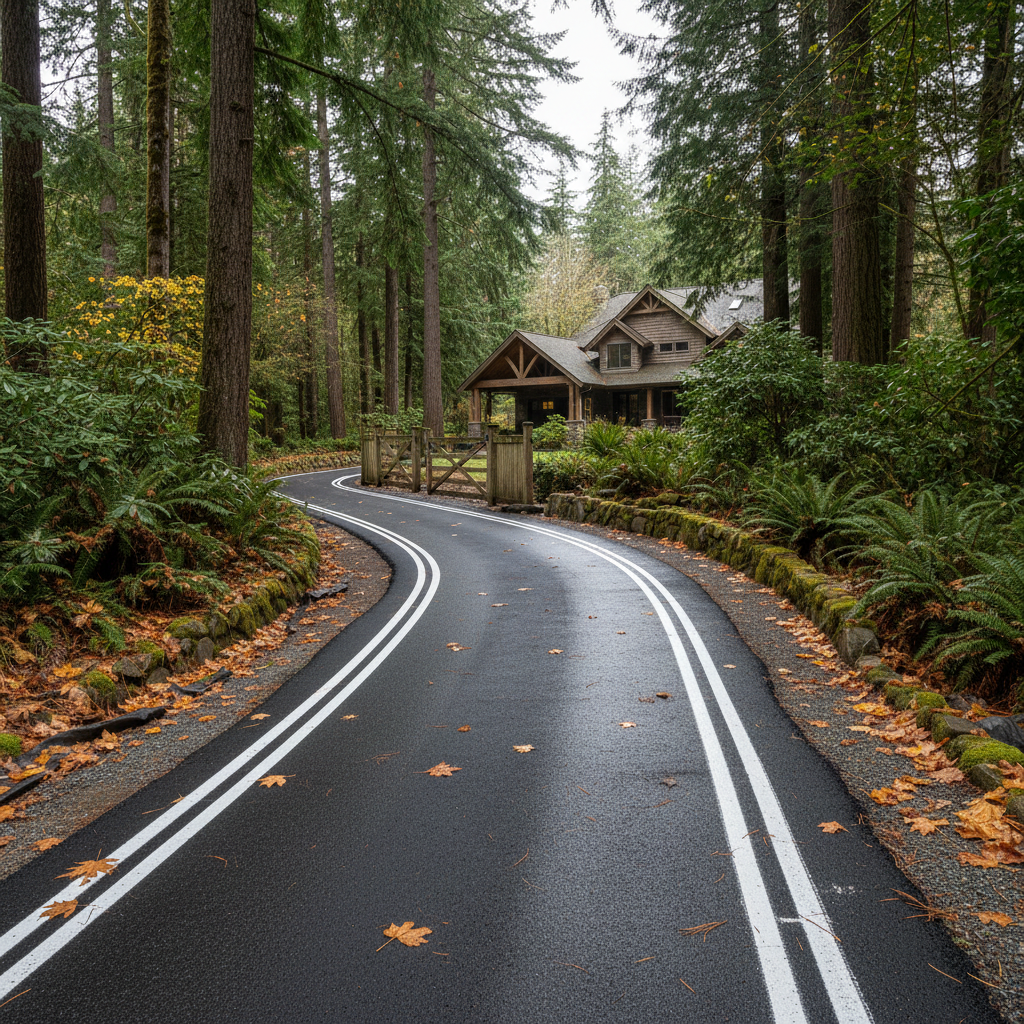
Driveways in Bellevue, WA experience many weather challenges throughout the year. Living in Bellevue means dealing with heavy moisture, moody spring transitions, and chilly damp air that tests every square foot of your pavement. If you want your driveway or parking lot to survive the elements, you have to work with the climate instead of fighting it.
Spring Recovery and Inspection
Winter leaves its mark around here. Between persistent rain and shifting soil conditions common in Eastside neighborhoods, water finds its way into tiny hairline cracks. When temperatures drop, that moisture expands and creates bigger problems. Once things dry out a bit in the spring, take a walk across your asphalt. Look for standing water or early signs of cracking. Catching these spots early saves you from massive repair bills down the road.
Summer and Dry Weather Maintenance
Summer gives us the best window for actual hands-on work. The extended dry spells and warmer temperatures mean materials cure properly without getting washed out by a sudden downpour. Whether you are filling cracks or refreshing faded lines, dry air is very important. Aim High Asphalt always tells customers to make the most of July and August because that is when the weather cooperates fully with heavy maintenance tasks.
Fall Preparation Before the Rains Return
Fall arrives fast around here. Before the endless drizzle sets in, you need your surfaces sealed and protected. Water is the ultimate enemy of asphalt. If you leave open cracks exposed to autumn leaves and heavy downpours, you are inviting structural failure before winter even starts. Clean out the debris, seal those gaps, and make sure your drainage paths are clear so runoff goes where it is supposed to.
Taking care of your pavement is not about doing everything at once. It is about doing the right chore at the right time of year. Stay ahead of the weather, and your asphalt will reward you with 15 to 20 years or more of solid performance.