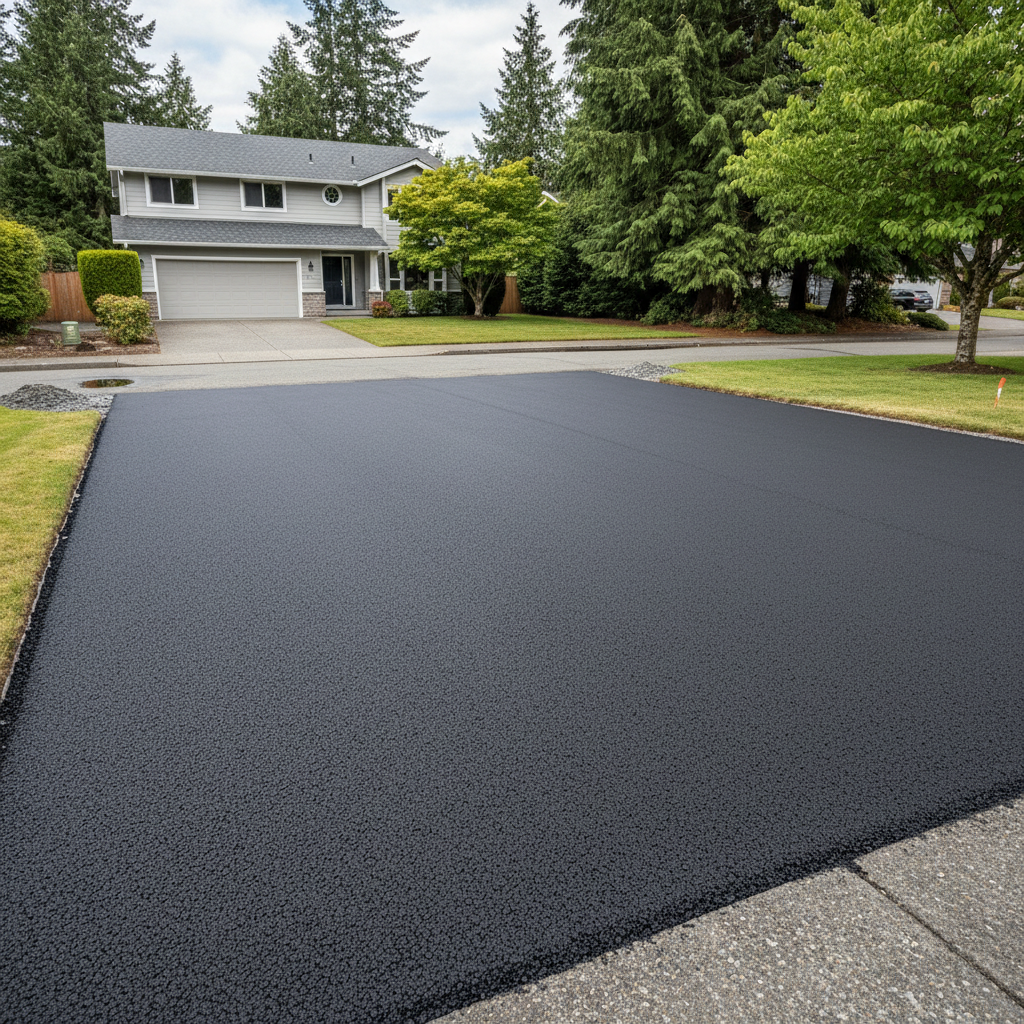
So, what's the real deal with a new asphalt driveway cost here in Bellevue? That's usually one of the first things people ask me, and it's a fair question. Nobody likes a surprise bill, especially for a big home improvement project like this. While I can't give you an exact figure without actually seeing your property, I can definitely lay out the main factors that drive costs and help you figure out a budget.
What Makes Asphalt Driveway Costs Go Up or Down?
A few key things really push the price tag one way or the other. It's not just about how big the driveway is, although that's certainly a major part of it.
- Size and Shape: This one's pretty obvious, right? A bigger driveway means more material, more labor, and more time for us. But the shape matters too. A simple rectangle is much easier and quicker to pave than some complex, winding driveway with a bunch of curves or odd angles. Those intricate edges demand more precision and handwork.
- Existing Driveway Condition (if any): Are we ripping out an old, cracked-up concrete or asphalt driveway? That demolition work and hauling away all the debris definitely adds to the cost. If you've just got a gravel driveway that needs grading and a good base, that's usually less expensive than a full-on demolition job.
- Base Preparation: This is probably the most crucial factor, and often the one people overlook. A good asphalt driveway is only as good as the foundation underneath it. If your soil is soft, like some of the clay-heavy stuff we see around Factoria or Newport Hills, we might need to do more extensive digging and bring in extra gravel or crushed rock to create a truly stable base. Skimping here means your driveway won't last, plain and simple.
- Asphalt Thickness: Most residential driveways get paved with two to three inches of compacted asphalt. Going thicker adds durability, which is great if you have heavy vehicles, but it also increases the material cost.
- Accessibility: Can our trucks and equipment easily get right to your driveway? If we have to haul materials a long distance from the street, or squeeze through tight spaces, that can add quite a bit to the labor time.
- Drainage Needs: Bellevue, as we all know, gets its fair share of rain. Proper drainage is absolutely critical to stop water from pooling and messing up your asphalt. This might mean grading the sub-base, putting in catch basins, or creating swales — all of which can expand the project's scope.
Typical Cost Ranges for Residential Asphalt in Bellevue
Alright, let's talk real numbers. For a standard residential asphalt driveway installation right here in Bellevue, you're generally looking at anywhere from $4 to $8 per square foot. This figure usually covers excavation, base prep, and laying down a couple of inches of asphalt.
So, to give you a better idea:
- A smaller, single-car driveway (let's say 300-400 sq ft) might run you $1,200 to $3,200.
- A more common two-car driveway (around 500-700 sq ft) could fall into the $2,000 to $5,600 range.
- For a larger, more elaborate driveway (800-1,200 sq ft or more), you might be looking at $3,200 to $9,600+.
Remember, these are just rough estimates. If you need extensive demolition, significant drainage work, or a very thick asphalt layer, those costs can definitely climb higher. For a complete tear-out and replace, including hauling away old material, you might find yourself closer to the higher end of that range, or even a bit above it for really complex jobs.
What Should a Good Quote Include?
When you get a quote from Aim High Asphalt, or anyone else for that matter, make sure it's detailed. It shouldn't just be one single number, should it? Here's what you'll want to see:
- Scope of Work: A clear description of exactly what we're doing. Is it a tear-out and replace? An overlay? A brand new installation?
- Materials: What kind of asphalt mix are they using? What type and depth of base material?
- Thickness: How many inches of compacted asphalt will you actually get?
- Site Preparation: Details on excavation, grading, and how they'll compact the sub-base.
- Drainage: Any specific drainage solutions they plan to put in.
- Timeline: An estimated start and completion date.
- Warranty: What kind of guarantee do they offer on their work?
- Permits: Who's responsible for pulling any necessary permits (though for most residential driveways, you usually don't need them unless you're changing the footprint a lot or affecting a public right-of-way).
How to Avoid Overpaying for Your Driveway
You want a good job at a fair price, right? Here's how to make sure you're getting exactly that:
- Get Multiple Bids: Don't just go with the first person who gives you a price. Get at least three detailed quotes. This helps you compare apples to apples and really understand the going rate in the market.
- Check References and Reviews: A low bid isn't much of a deal if the work ends up shoddy. Look for contractors with a solid reputation and good reviews. Ask for references, and actually call them up.
- Ask About the Base: I really can't stress this enough. The base is everything. Ask about the depth of the aggregate base and how they'll compact it. A contractor who talks confidently about their base prep is usually a very good sign.
- Don't Rush: Don't let anyone pressure you into signing on the spot. Take your time, review the quotes, and ask all your questions.
- Beware of Door-to-Door Solicitations: If someone shows up unannounced offering a deal because they 'just finished a job down the street,' be very, very cautious. This is a super common scam tactic. Reputable contractors typically don't operate that way.
A new asphalt driveway is a pretty big investment in your home. Doing your homework upfront means you'll end up with a durable, good-looking driveway that adds value and curb appeal for years to come. If you're in Bellevue and thinking about your driveway, give us a call at Aim High Asphalt. We're always happy to walk you through the process and give you a clear, honest quote.