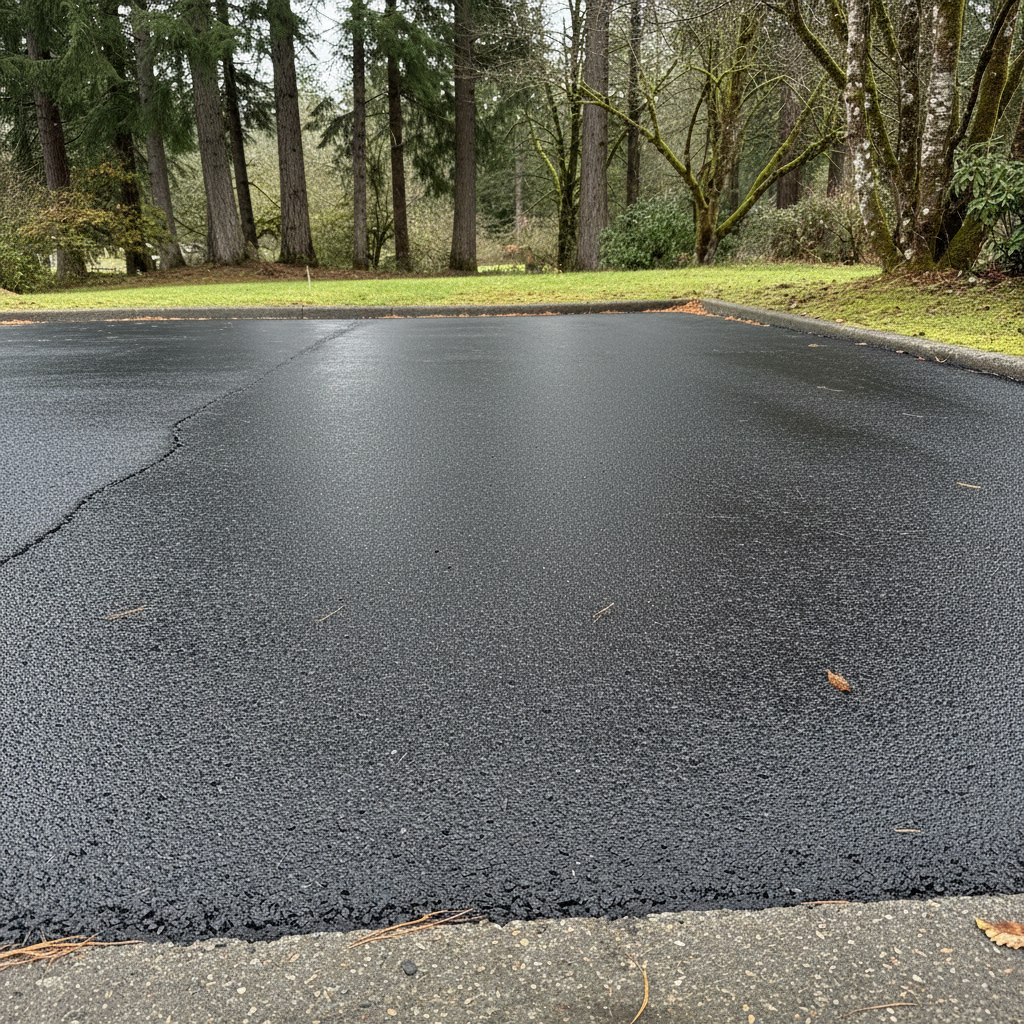
Your asphalt driveway is a big investment, and sealcoating is one of the best ways to protect it. But when it comes to actually doing the work, a lot of homeowners wonder: can I just do this myself, or should I call someone? It's a fair question, and the answer isn't always black and white. Let's talk about what's involved so you can make the right call for your property.
Before You Start: Prep is Everything
Whether you're doing it yourself or hiring us, the prep work is probably the most crucial step. You can't just slap sealcoat over a dirty, cracked driveway and expect it to last. First, you need to clean the surface. I'm talking about a thorough cleaning. Sweep off all loose debris, dirt, and leaves. Then, you'll want to power wash it. Get rid of any oil stains, grease, or mildew. For oil spots, you might need a degreaser and a stiff brush. Rinse everything really well and let it dry completely. And I mean completely – no puddles, no damp spots. If your driveway is still wet, the sealcoat won't adhere properly, and you'll have wasted your time and money.
Next, you've got to tackle any cracks or potholes. Small cracks, say up to a quarter-inch wide, can usually be filled with an asphalt crack filler. You squeeze it in, let it cure, and then you're good to go. For bigger cracks or actual potholes, that's where it gets a bit more involved. You might need cold patch asphalt for those. If you've got a lot of significant damage, especially if it's been neglected for years, that's often a sign it's time to call in a professional. We've seen driveways in places like Somerset and Cougar Mountain that have seen a lot of rain and freeze-thaw cycles, and they need more than just a quick patch job.
The Sealcoating Process: DIY vs. Pro Application
Okay, so you've prepped the surface. Now for the actual sealcoating. If you're going the DIY route, you'll buy buckets of asphalt sealer from a home improvement store. You'll need a squeegee or a special sealer brush to apply it. The key here is even application. You want thin, uniform coats. Don't glop it on thick, thinking more is better – it'll just peel and crack later. Most products recommend two thin coats, allowing proper drying time between each. This drying time is critical, especially with Bellevue's often damp weather. You need at least 24-48 hours of dry, mild weather for the sealer to cure properly. That can be tough to predict around here sometimes!
Now, why call a pro like Aim High Asphalt? Well, for starters, we use commercial-grade sealers. These aren't the same products you buy off the shelf. They're designed for durability and longevity, often with additives that improve flexibility and resistance to things like UV rays and chemicals. We also have specialized equipment – spray applicators that ensure a perfectly even coat, faster and more efficiently than you ever could with a squeegee. Plus, we're experienced. We know how to handle different asphalt conditions, how to work around tricky edges, and how to get the job done right the first time. If your driveway is large, has steep slopes, or is heavily trafficked, a professional application is almost always worth the investment.
After the Job: Curing and Care
Once the sealcoat is down, whether you did it or we did, you need to give it time to cure. This is non-negotiable. Stay off the driveway for at least 24-48 hours, and sometimes even longer if it's humid or cooler. Driving on it too soon will leave tire marks and can damage the fresh sealcoat. You'll want to avoid parking heavy vehicles on it for the first few days, too. Keep an eye on the weather forecast; you don't want rain hitting a freshly sealed driveway.
After it's fully cured, your driveway will look fantastic – a deep, rich black. To keep it that way, a little ongoing care goes a long way. Clean up spills quickly, especially oil or gas. Avoid turning your steering wheel while stationary on the asphalt, as this can scuff the surface. And plan to re-seal every 2-3 years, depending on traffic and weather exposure. Regular maintenance is what keeps that asphalt looking good and prevents those costly repairs down the line.
So, can you DIY sealcoating? Absolutely, for smaller, well-maintained driveways with minimal damage. But for larger areas, significant repairs, or if you just want the best possible protection and finish, calling in a professional like us at Aim High Asphalt is usually the smarter move. We've got the materials, the equipment, and the know-how to make your driveway look great and last for years.