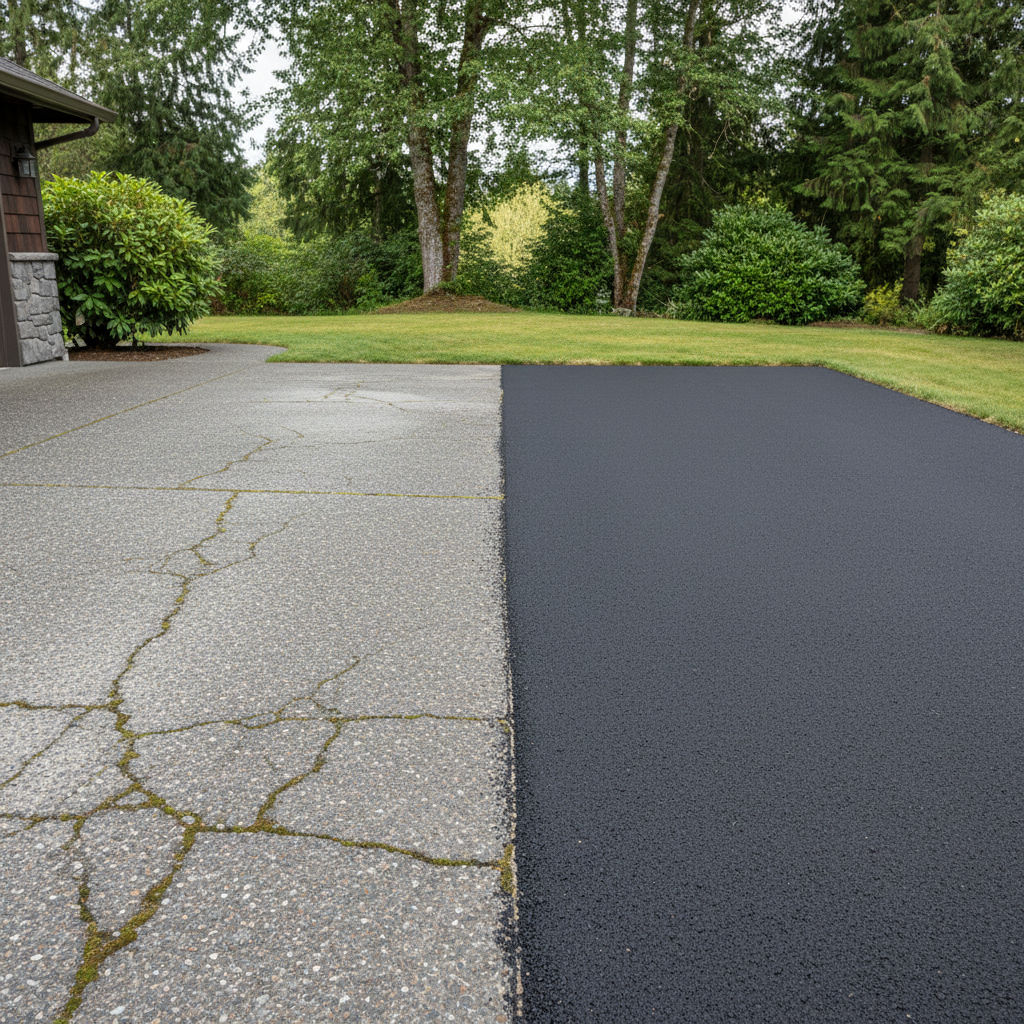
Deciding how to protect your asphalt driveway can be tricky. You've got a couple of main options for a slurry coat, and I'm going to break them down for you. We're talking about two common approaches: a true slurry seal and a standard asphalt emulsion sealcoat. They both aim to protect your asphalt, but they do it in pretty different ways, and knowing the difference can save you a headache and some money down the road.
What's the Big Idea Behind Slurry Coating?
First off, why even bother with a slurry coat? Simple: it's about extending the life of your asphalt. The sun, rain, and traffic all take a toll. Your asphalt starts to oxidize, tiny cracks form, and it just generally looks worn out. A slurry coat is a protective layer you put on top to seal those small cracks, restore the black color, and provide a new wearing surface. Think of it like sunscreen and a fresh coat of paint for your driveway. It's not a fix for major structural issues, mind you, but for healthy asphalt that's just showing its age, it's a great preventative measure.
Option 1: The True Slurry Seal (Microsurfacing)
When I talk about a "true" slurry seal, often what I'm referring to is a microsurfacing treatment. This isn't just paint; it's a mix of polymer-modified asphalt emulsion, fine aggregate (like sand or crushed rock dust), water, and some chemical additives. It's a more substantial application than a basic sealcoat.
- Cost: Generally, a true slurry seal costs more upfront. You're paying for more material and a more complex application process.
- Durability: This is where it shines. Because of the aggregate and polymer modifiers, it's much more durable. It provides a new wear layer that can stand up to traffic and the elements a lot better. It's designed to last longer, typically 5-7 years, sometimes even more.
- Maintenance: Once it's down, maintenance is pretty minimal, just like any asphalt surface – keep it clean, address spills quickly.
- Appearance: It gives a slightly coarser, more textured finish due to the aggregate. It's a uniform black, but not as smooth as a pure emulsion. It can fill very small surface imperfections better than a thin sealcoat.
- Application: It requires specialized equipment and expertise. It's not a DIY job, and you need a contractor who knows what they're doing to get it right.
Option 2: Standard Asphalt Emulsion Sealcoat
This is what most homeowners think of when they hear "sealcoating." It's primarily an asphalt emulsion, water, and sometimes some sand for traction or fillers. It's a thinner, less robust application compared to a true slurry seal.
- Cost: Significantly less expensive upfront. It's a more common service, and the materials are cheaper.
- Durability: It offers good protection against UV rays and water penetration, but it's not as durable as a true slurry seal. It wears down faster, especially in high-traffic areas. You're typically looking at 2-3 years before it needs reapplication.
- Maintenance: Similar to slurry seal, but you'll be doing it more often.
- Appearance: It provides a very smooth, deep black finish that looks fantastic right after application. It really makes your driveway pop.
- Application: Can be applied by hand, spray, or squeegee. While many try to DIY it, getting a professional finish without streaks or uneven spots is harder than it looks.
Which One Makes Sense for Your Bellevue Driveway?
Here in Bellevue, we deal with a lot of rain, freeze-thaw cycles in the winter, and plenty of trees dropping leaves and debris. Plus, many homes, especially up in areas like Somerset or Cougar Mountain, have longer, steeper driveways that see a fair amount of use and need good traction.
For most homeowners, I generally recommend the standard asphalt emulsion sealcoat for regular maintenance. It's cost-effective, looks great, and if you're reapplying every 2-3 years, you're keeping your asphalt well-protected. It's a great choice for driveways that are in good shape and just need that regular refresh.
However, if you've got a driveway that's starting to show a bit more wear, maybe a few more hairline cracks, or if you simply want the absolute longest-lasting protection possible between applications, then a true slurry seal (microsurfacing) is worth considering. It's a bigger investment, but it buys you more time and a more robust surface. It's also fantastic for larger paved areas that see more traffic, like private roads or shared driveways.
The key is to match the treatment to the condition of your asphalt and your budget. Don't put a cheap sealcoat on a driveway that needs major repairs, and don't overspend on a slurry seal if a basic sealcoat will do the trick. We've seen plenty of driveways around Clyde Hill and Medina that have been well-maintained with regular sealcoating, lasting decades.
Ultimately, both options are about protecting your investment. If you're unsure which is right for your property, give us a call at Aim High Asphalt. We can take a look at your specific situation and give you an honest recommendation. It's all about making sure your asphalt lasts as long as possible and looks good doing it.